


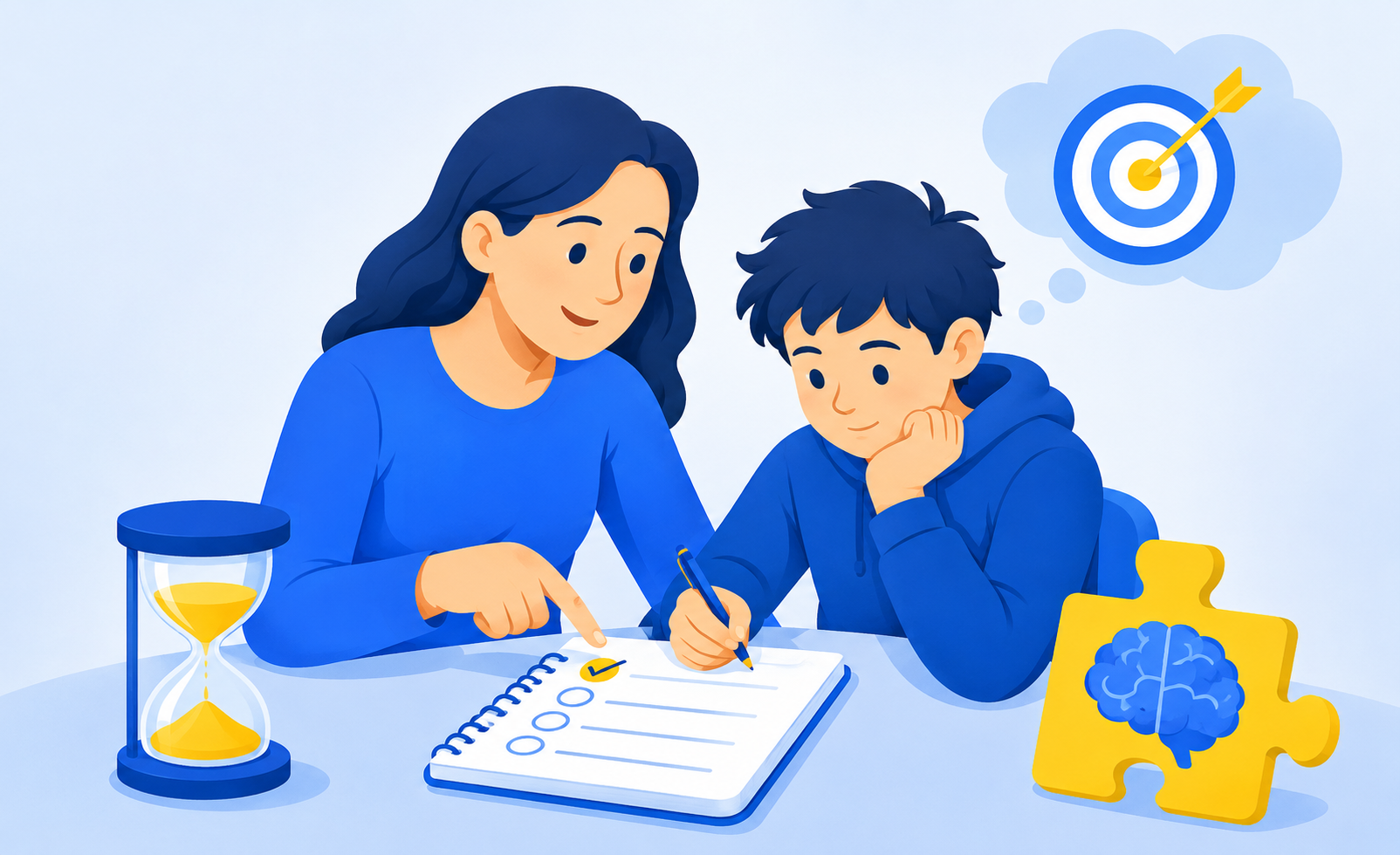
Procrastination is one of the most common struggles parents see in neurodivergent children. Homework gets delayed. Rooms stay messy. Getting dressed becomes a battle. A project that should take 20 minutes turns into hours of avoidance, frustration, and shame.
But as Frances Shefter and occupational therapist/executive functioning coach Amy Orlando discussed on Stress-Free IEP, procrastination is rarely about laziness. It is often a sign that the child’s brain is overwhelmed, under-stimulated, unsure where to start, or using a strategy that simply does not fit.
For parents of children with ADHD, autism, executive functioning challenges, or other learning differences, this shift matters. Instead of asking, “Why won’t my child just do it?” the better question may be, “What is making this hard for their brain right now?”
Procrastination Is Not a “Try Harder” Problem
Many children hear the same messages over and over: try harder, just start, stop avoiding it, get it done.
The problem is that those phrases usually do not teach a child what to do differently. They can also increase shame. When a child already feels stuck and then starts believing they “should” be able to do the task, the avoidance can get worse.
Amy explained that procrastination often connects to dopamine, the brain chemical that helps signal importance, motivation, and reward. When a task feels too boring, the brain may look for something more stimulating, like a phone, video, or game. When a task feels too big, the brain may predict failure and shut down before the child even begins.
That means two children may procrastinate for completely different reasons. One may be avoiding math homework because it feels tedious. Another may avoid the same homework because they do not understand the first step. The support they need may be very different.
Break the Task Down Until the Brain Predicts Success
Frances shared that for her, procrastination often shows up when she does not know where to begin. That is true for many students, especially when assignments have multiple steps.
Amy explained that when a task feels too large, the brain may predict failure. But when the task is broken down into a very small next step, the brain is more likely to think, “I can do that.”
For a child, “clean your room” may be too big. “Put the dirty clothes in the hamper” may be doable.
“Start your project” may be too vague. “Open the document and write the title” may be the right first step.
The goal is not to remove responsibility. The goal is to create an entry point that allows momentum to begin. Once the child starts, the next step often becomes easier.
This is especially important when thinking about IEPs. “Break down assignments” is a common accommodation, but Frances pointed out that it should be individualized. Some students benefit from seeing all five steps at once. Others shut down when they see the whole list and need only step one first, then step two after that.
Both approaches can be valid. The key is knowing which one fits the child.
Get Curious Instead of Assuming
One of the strongest takeaways from the conversation was the importance of curiosity.
Parents often think they know why a child is struggling. But what looks obvious to an adult may not match what the child is experiencing. A parent may assume the child is being defiant, when the real barrier is confusion, anxiety, sensory overwhelm, fatigue, or not knowing how to start.
Amy encouraged parents to ask questions such as:
- “What feels hard about this?”
- “What part is getting in the way?”
- “What has worked before?”
- “What would make this easier to start?”
That curiosity can reduce power struggles. It also gives the child a chance to understand their own brain.
Frances connected this to demand avoidance and parent-child dynamics. When adults only make demands, some children automatically push back. But when adults approach the problem as something to solve together, the child is more likely to take ownership.
That ownership matters. A strategy that a child helps choose is more likely to be used than one imposed by an adult.
IEP Supports Should Build Independence
Frances also highlighted a crucial point for families: IEPs should not only help a child get through the current school year. They should also help that child move toward adulthood.
Supports are necessary. Accommodations matter. But as students get older, the team should also ask whether the student understands why those supports help and how to advocate for them.
Amy gave the example of extended time. It is helpful to have extended time written into an IEP, but a student also needs to understand why extended time helps them. Do they need it because they process language more slowly? Because they struggle with writing output? Because anxiety slows them down? Because attention affects pacing?
When students understand the “why,” they are better prepared to speak up when a teacher forgets, when they enter college, or when they move into work settings where they need to explain what helps them succeed.
Frances shared that her daughter has attended parts of her own IEP meetings since elementary school. Not the whole meeting, but enough to talk about what is working and what is not. That gives the team information adults may miss, and it gives the child practice using their voice.
As Frances emphasized, adults can read evaluations and recommend common supports, but every child’s brain is different. The child’s input matters.
Practical Strategies That Can Help
The conversation also covered several practical executive functioning strategies families can try.
One is reducing “cheap dopamine.” If a task is boring, a phone or video can quickly pull the child away. For some children, music may help make a task more enjoyable without becoming too distracting. For others, visual media may be too absorbing and make the task harder to finish.
Another strategy is catching momentum. Starting is often the hardest part. A five-minute timer, a 30-minute work block, or a very small first step can help the brain get moving.
Amy also discussed body doubling, which means working alongside someone else. The other person does not have to do the same task. Their presence can create accountability and make the task feel less isolating. This can work for homework, chores, paperwork, organizing, or other tasks that tend to get avoided.
Gamification can also help. Turning a boring task into something more rewarding, visual, or game-like can increase motivation. Amy mentioned apps like Finch, where completing tasks helps care for a virtual pet. For some children, that kind of reward system can make routines feel less like demands and more like progress.
The Bigger Lesson: The Strategy Has to Fit the Brain
There is no one-size-fits-all executive functioning plan.
Some children need checklists. Some need one instruction at a time. Some need timers. Some need movement. Some need quiet. Some need music. Some need accountability. Some need to understand exactly why a support is being used.
The best strategies are not just the ones that sound good on paper. They are the ones that actually work for that child, in that context, with that brain.
For parents navigating IEPs, 504 plans, school supports, and daily home routines, this is the bigger lesson: behavior is information. Procrastination is information. Resistance is information. Instead of stopping at “my child won’t do it,” look for the barrier underneath.
When families and schools understand the child’s brain, they can build supports that reduce shame, improve follow-through, and help the child develop real independence.
Reah Amy through her website: https://www.aeocoachingot.com/
Need our guidance? Book a Free Case Analysis here!