


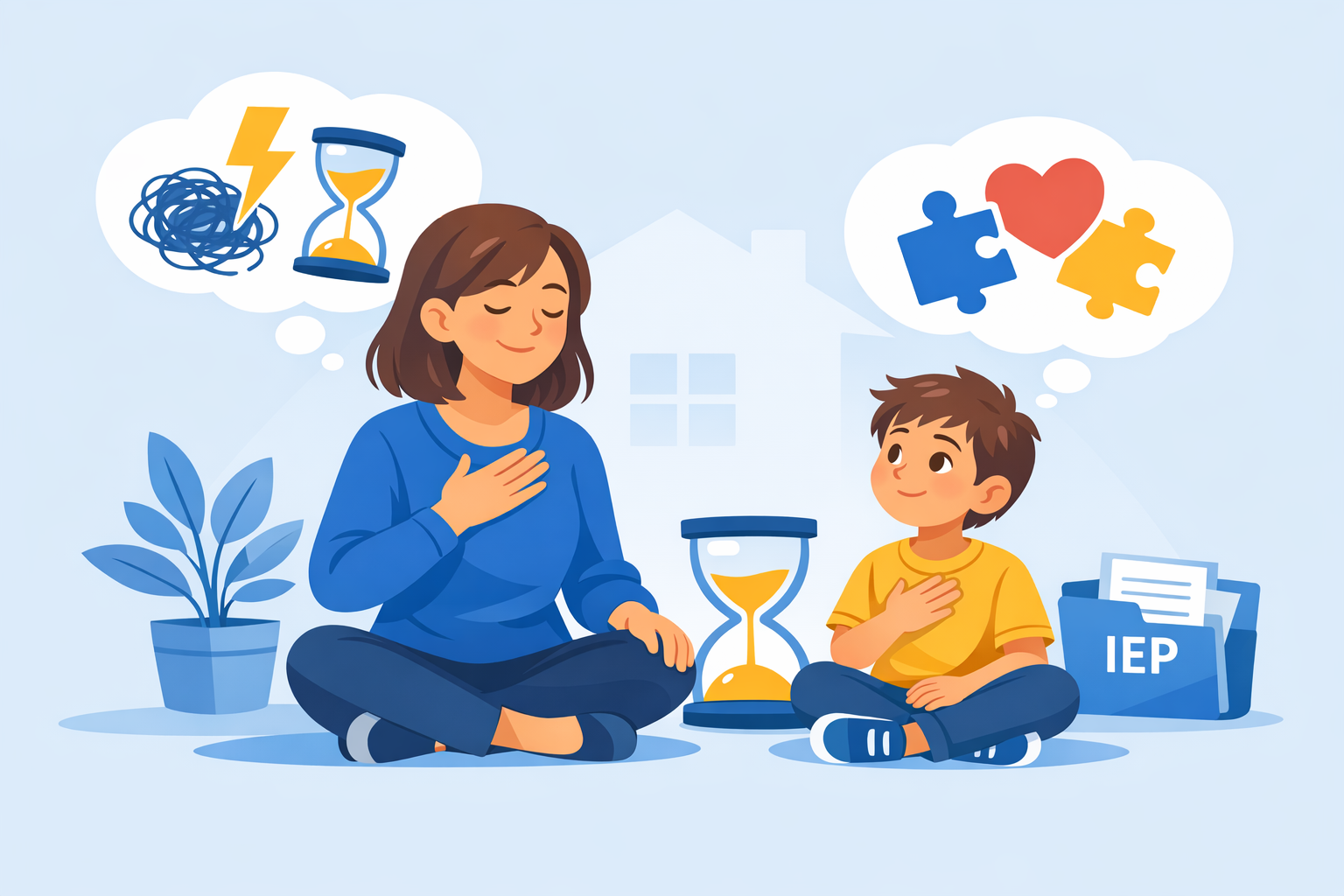
In this episode of Stress-Free IEP, Frances Shefter sits down with psychotherapist Matthew Fishleder to tackle something every parent—especially those raising neurodivergent children—feels daily: stress, overwhelm, and the constant question of “am I doing this right?”
What unfolds is a grounded, honest conversation about parenting—not as a set of rules, but as a process of self-awareness, regulation, and connection.
The Shift: From Controlling Kids to Understanding Yourself
Matthew makes a critical distinction early on:
Parenting isn’t about eliminating triggers—it’s about recognizing them and choosing how to respond.
Most parents come in asking:
- “How do I stop reacting like this?”
- “How do I turn this off?”
His answer? You don’t.
Instead:
- Notice the trigger
- Accept that it’s happening
- Choose your response anyway
This is what he calls reconnecting with choice. Over time, this doesn’t eliminate triggers—it lowers their intensity.
Frances relates this to real life: sometimes the best move is simply to step away, regulate, and come back. And that alone becomes powerful modeling for kids.
Why Your Reactions Matter More Than Your Child’s Behavior
A major theme:
Behavior modification isn’t just about the child—it’s about the parent.
Matthew flips the traditional approach:
- You can’t change your child’s nature
- But you can change how you respond to it
This is especially important for neurodivergent kids, whose behaviors may not fit traditional expectations.
Frances highlights this perfectly:
The goal isn’t to suppress who your child is—it’s to guide them without extinguishing their spark.
That includes traits like:
- Negotiating
- Questioning
- Pushing boundaries
These may feel challenging now—but they’re often future strengths.
Equal vs. Fair: The IEP Mindset at Home
One of the most practical takeaways ties directly to IEP thinking:
Equal is not the same as fair.
The classic analogy comes up:
- Three kids trying to see over a fence
- Giving each the same box (equal) doesn’t work
- Giving each what they need (equity) does
This applies everywhere:
- At school → accommodations
- At home → parenting style
Different kids need different approaches. That’s not favoritism—it’s effective parenting.
There Is No Parenting Manual (And That’s the Point)
Parents often search for the “right way” to parent.
Matthew challenges that idea completely:
- There are endless books
- Many contradict each other
- No single method works for every child
So instead of asking “how do I parent?”, he suggests asking:
“How do I tend to parent—and why?”
That shift moves you toward:
- Awareness of your patterns
- Understanding your own upbringing
- Recognizing when you’re reacting vs. responding
Triggers Come From Your Past—Not Just Your Child
One of the most powerful insights:
Your child’s behavior often activates your own childhood experiences.
Example:
- Your child feels unseen → gets upset
- That reminds you of when you felt unseen
- You become dysregulated
Now you’re reacting to two experiences at once:
- Your child’s current behavior
- Your past emotional memory
The solution isn’t to suppress this—it’s to notice it:
“This is happening because of something in me.”
That awareness creates space to respond differently.
Regulation Starts With You
You cannot regulate your child if you’re dysregulated.
That’s the reality.
Parents often try to:
- Calm their child
- Fix behavior
- Enforce rules
But Matthew emphasizes:
- Start with your own nervous system
- Get grounded first
- Then help your child
This is especially critical during:
- Meltdowns
- Teen emotional swings
- High-stress transitions
Letting Go of the “Ideal Child”
Another subtle but important shift:
Parents must learn to separate their own hopes from their child’s identity.
Matthew shares a personal example:
- He loved music growing up
- Tried to get his son into it
- His son had zero interest
The takeaway:
- That desire belongs to the parent—not the child
Parenting requires:
- Noticing those expectations
- Labeling them
- Letting the child be who they are
Structure vs. Flexibility: You Need Both
This episode doesn’t argue for “no rules.”
Instead, it’s about balance:
Yes:
- Boundaries matter
- “No” is sometimes final
Also yes:
- Flexibility matters
- Fun and spontaneity matter
Frances’ “cheesecake first” example captures this perfectly:
- Not the norm
- But a thoughtful, intentional deviation
Kids don’t learn from occasional exceptions—they learn from patterns.
And sometimes those exceptions:
- Build connection
- Create joy
- Strengthen relationships
The Real Goal: Connection Over Control
At its core, this conversation keeps coming back to one idea:
Parenting is about connection—not control.
That includes:
- Spending time together
- Being present
- Showing flexibility
- Letting kids feel seen
Even small moments—like extending game time—can communicate:
“I enjoy being with you.”
That message sticks.
A Simple Tool You Can Use Today
Matthew closes with a practical strategy parents can start immediately:
1. Name It
When you feel overwhelmed:
- “This is frustration”
- “This is anxiety”
Naming it helps calm the brain.
2. Breathe
Focus on:
- Cool air in
- Warm air out
No counting. No complexity. Just awareness.
3. Create Space to Choose
Once you’re regulated:
- You can respond
- Not just react
This simple sequence helps shift you out of autopilot.
Final Thought
Parenting isn’t about getting it right every time.
It’s about:
- Noticing
- Adjusting
- Growing
And most importantly:
Seeing the child in front of you—not the one you expected.
That’s where real connection—and real progress—happens.
Do you think you may use our help? Book a Free Case Analysis here, and find out if we can help you.
Do you want to get in contact with Matthew? Click here to go to his website.