


By: Frances Shefter, Esq.
When your child has an IEP, you expect to see progress. That’s the whole point. So, it can feel confusing—and honestly, upsetting—when months go by and nothing seems to be improving. You might be hearing that your child is “doing fine” at school, while at home you’re seeing the same struggles with reading, behavior, or frustration. If that disconnect feels familiar, you’re not alone. I see this all the time, both as a special education attorney and as a mom of neurodivergent kids myself.
One of the biggest misunderstandings in special education is this: having an IEP does not automatically mean your child is getting what they need. Schools can be technically “compliant” with the law while your child is still not making meaningful progress. And for parents, that can be incredibly hard to spot at first. Schools like to say that grades are fine and standardized test scores are showing improvement. But, are the grades based on grade level standards and what is enough improvement to be considered meaningful progress?
There are a few common reasons this happens. Sometimes the goals in the IEP are too vague or too easy, so progress looks better on paper than it is in real life. Other times, the services just aren’t intensive enough—maybe your child needs more specialized instruction, smaller group support, or a different teaching approach. I also see situations, more often than I should, where a progress report says the student is making sufficient progress towards a goal, but the description does not reflect progress at all. Sufficient progress towards a goal means the child should master the entire goal, not just a few objectives, by the end of the IEP year. If the goal is that a child should be able to write a five-sentence paragraph with a clear topic and supporting evidence and at quarter three of the IEP year (not school year) your child is just writing one sentence, is it realistic that they will be writing five sentences in the next nine-weeks?
As a parent, your instincts matter here. If you feel like something isn’t working, it’s worth paying attention to that. You don’t need to wait for the school to raise concerns first.
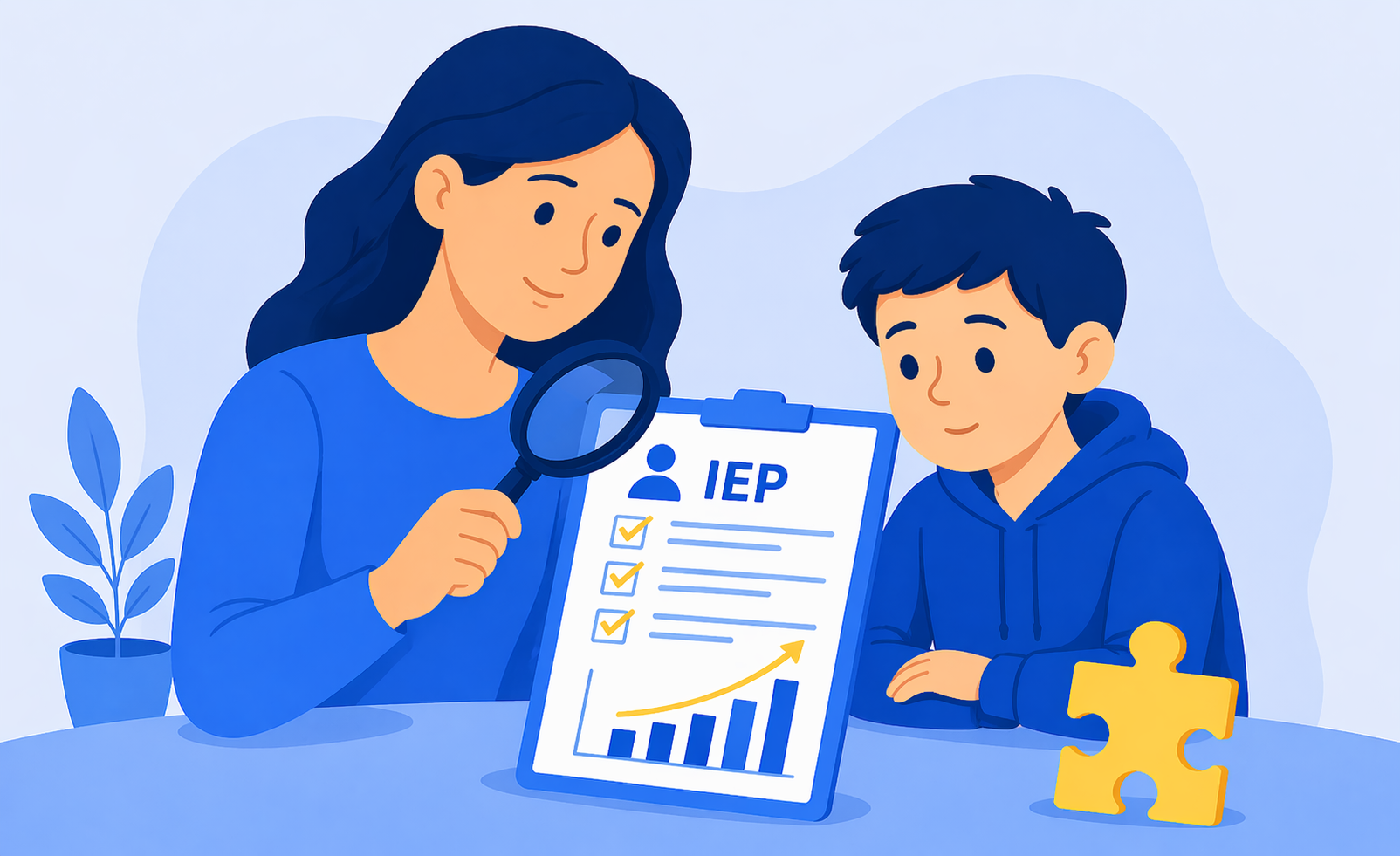
A good place to start is by taking a closer look at the IEP itself, and the quarterly progress reports. Are the goals specific and measurable? Does the progress report match the goal in how it is being measured? Do you understand how progress is being tracked? If not, it’s okay to ask for clarification. You can also ask for the actual data behind the progress reports—not just the summary. Seeing the raw numbers or work samples can give you a clearer picture of what’s really happening.
If you’re still concerned, you have the right to ask for an IEP meeting at any time. In that meeting, you can raise your concerns and ask what changes can be made. That might include revising goals, being clearer on how data is being tracked, increasing services, or adding supports. Sometimes, though, the deeper issue is that the school’s understanding of your child’s needs isn’t accurate. In those cases, an evaluation can be an important next step to get a more complete picture.
It’s also important to know that if your child hasn’t been making appropriate progress, there may be a need to make up for lost time. The law doesn’t just require schools to provide services—it requires those services to be effective.
I know how overwhelming this process can feel. When it’s your child, it’s not just about paperwork or meetings—it’s about wanting them to feel confident, capable, and supported. It’s also hard to push back when you’re being told everything is “fine,” especially if you’re not sure what your rights are.
At Shefter Law, we spend a lot of time helping families sort through exactly this situation. That might look like reviewing an IEP with you, helping you understand whether the goals and services are appropriate, or guiding you on how to request changes in a way that gets results. Sometimes families just need a clearer roadmap and someone to explain what’s possible. Other times, more formal advocacy is needed.
Either way, the goal is the same: making sure your child’s education is actually working for them—not just on paper, but in real life.
If you’re feeling stuck or unsure, it’s okay to ask questions and take the next step. Your child’s progress matters, and you do not have to do it all alone. Reach out and schedule a free case analysis to see how we can help support you.