

By: Frances Shefter, Esq.
Many parents come to me after they’ve raised concerns about their child at school and asked for a special education evaluation. They’ve noticed their child struggling—maybe with reading, attention, behavior, or social skills—and they want to understand why.
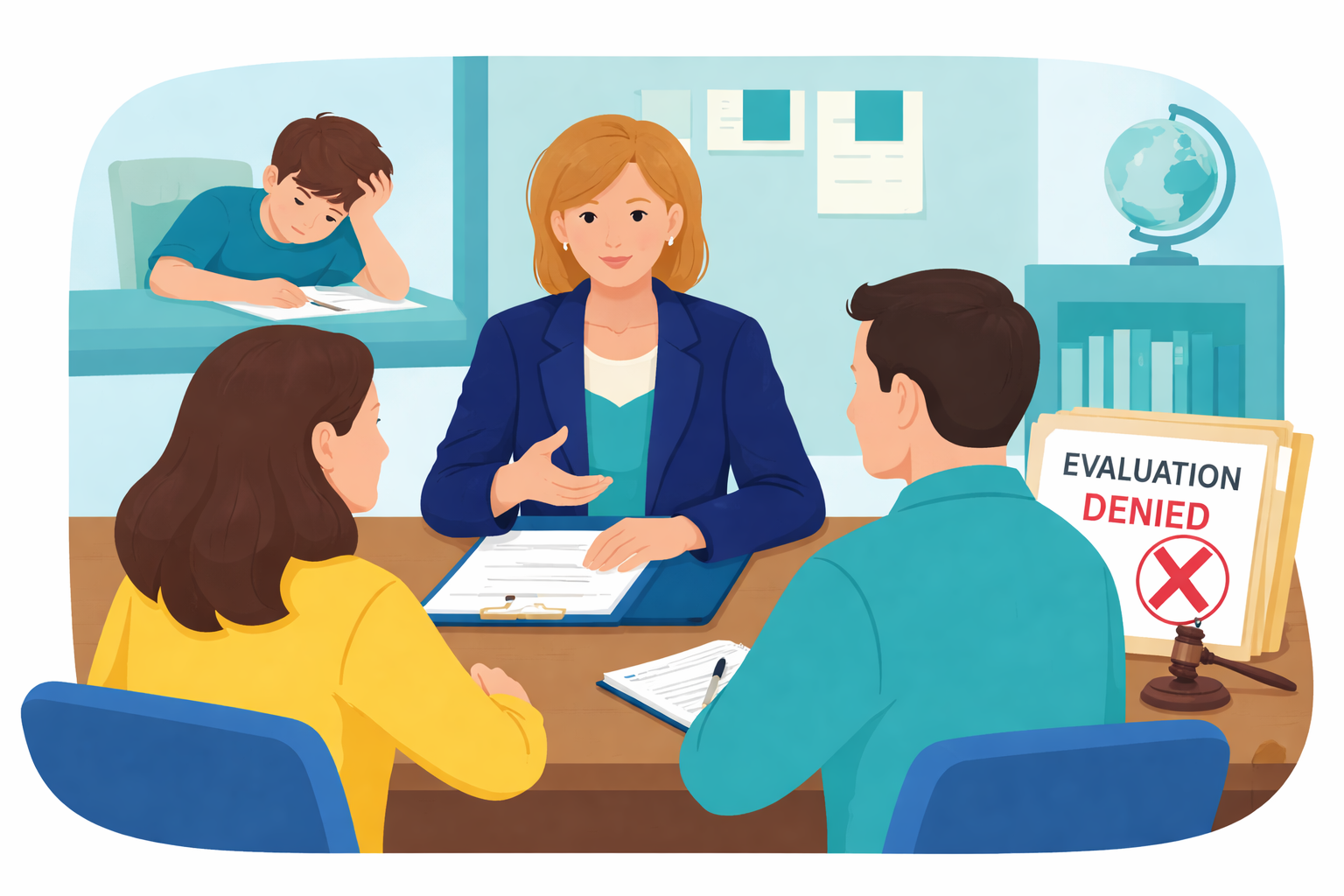
Then the school says no.
Sometimes the explanation sounds reasonable at first: “Let’s wait and see.”
Other times it’s something like: “Your child is doing okay academically,” or “We want to try classroom interventions first.”
When parents hear this, they often assume the school has the final say.
But here’s the important thing to know: a school’s initial refusal to evaluate your child is not the end of the process. Parents still have rights under federal special education law.
Why Evaluations Matter
Under the Individuals with Disabilities Education Act (IDEA), children with disabilities are entitled to a Free Appropriate Public Education (FAPE). In order to determine whether a child qualifies for special education services, the school must conduct a comprehensive evaluation.
That evaluation looks at areas where a child may be struggling, such as:
- learning and academic skills
- attention and executive functioning
- speech and language
- behavior and emotional needs
- social development
Without an evaluation, it can be very difficult to identify the support a child may need.
Can a School Refuse an Evaluation?
Schools are allowed to refuse an evaluation in certain circumstances, but they cannot simply ignore a parent’s concerns or dismiss them without explanation.
If a school denies your request, they are required to provide something called Prior Written Notice. This document should explain:
- why the school refused the evaluation
- what information the school relied on in making that decision
- what options were considered and rejected
This requirement exists so parents understand the reasoning behind the decision and can decide what steps to take next.
What Parents Can Do Next
If your child’s school denies an evaluation, there are several steps you can take to move the process forward.
- Make the request in writing
If you initially raised your concerns in a meeting or conversation, it’s a good idea to follow up with a written request for an evaluation. Written requests trigger specific timelines under special education law.
- Ask for Prior Written Notice
If the school refuses, ask them to provide the written explanation required by law. This document can be very helpful in understanding the school’s position.
- Review the data the school is relying on
Schools often base their decisions on grades, classroom performance, teacher observations, or screening tools. Reviewing this information can help you see whether important concerns may have been overlooked.
- Consider an Independent Educational Evaluation
In some situations, parents may be able to request an Independent Educational Evaluation (IEE) conducted by a professional outside the school system at public expense.
An independent evaluation can provide a more detailed picture of what your child may be experiencing and whether special education services are appropriate.
The Reality Many Parents Face
In my experience working with families, it’s very common for parents to hear “no” the first time they request help.
Sometimes schools truly believe a child does not need special education services. But other times, delays happen because schools want to try informal supports first or because resources are limited.
The problem is that waiting can allow a child’s struggles to continue longer than they should.
Parents know their children best. If you believe your child may have a disability that is affecting their education, it’s important to keep asking questions and advocating for answers.
How a Special Education Lawyer Can Help
Many families try to navigate this process on their own, and sometimes that works. But when disagreements continue or the process becomes confusing, it can be helpful to speak with someone who focuses on special education law.
A special education lawyer can help parents:
- understand their legal rights
- review school records and evaluations
- communicate effectively with the school
- explore options such as mediation or due process if needed
In many cases, issues can be resolved through better communication and a clearer understanding of the law.
The Bottom Line for Parents
If your child’s school denies a special education evaluation, it does not mean the conversation is over.
Parents have the right to ask questions, request written explanations, and pursue further evaluations if necessary. Taking those steps can make a real difference in making sure your child receives the support they may need to succeed in school.
And most importantly, you don’t have to navigate the process alone. Understanding your rights is the first step toward making sure your child receives the education they deserve.